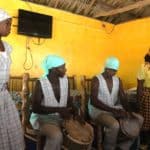
The Mennonites are a small but influential cultural group in Belize. While they make up only about 4% of the population, their impact is felt daily through agriculture, food production, and rural development, all rooted in a strong religious and community-based way of life.
Arrival and Settlement in Belize
Mennonites first settled in Belize in 1958 after reaching an agreement with the Belizean government, then British Honduras. This agreement granted them religious freedom, control over their schools, and exemption from military service. In return, Mennonite communities committed to agricultural production and economic participation.
Most Mennonites migrated to Belize from Mexico, though their deeper roots trace back to Europe, Canada, and the United States. They were drawn by fertile land, a favourable climate, and the ability to preserve their religious traditions with limited outside interference.
Mennonite Groups in Belize
Although often viewed as a single group, Mennonites in Belize belong to different branches that vary in how strictly they follow traditional customs.
The Old Colony (Altkolonier) Mennonites are the most conservative. They limit the use of modern technology, rely on horse-drawn buggies for transportation, and dress plainly. Communities such as Shipyard, Barton Creek, Springfield, and Little Belize reflect this way of life.
The Kleine Gemeinde (Small Church) Mennonites are more progressive and economically integrated. Communities such as Spanish Lookout and Blue Creek use modern farming equipment, operate large businesses, and engage extensively with the wider Belizean economy.
These differences explain why Mennonite communities in Belize can look and function very differently from one another.
Mennonite Communities in Belize
| Location | Description |
|---|---|
| Little Belize | Little Belize is a traditional Mennonite settlement in Corozal that follows a conservative lifestyle. Technology use is minimal, dress is plain, and community life is guided by religious discipline and self-sufficiency. |
| Shipyard | Located in Orange Walk, Shipyard is one of the most traditional Mennonite communities in Belize. Horse-drawn buggies are common, electricity use is limited, and Low German is widely spoken. |
| Blue Creek | Also in Orange Walk, Blue Creek is one of the more economically integrated Mennonite settlements. Large-scale farming, agro-processing, and cross-border trade play an important role in daily life. |
| Indian Creek | Indian Creek is another Mennonite community in Orange Walk that practices a more traditional way of life. Farming is central to the community, and modern technology is used sparingly. |
| Spanish Lookout | The most modern and economically influential Mennonite community in Belize. Spanish Lookout is a major agricultural, manufacturing, and commercial hub in Cayo, supplying poultry, dairy products, grains, animal feed, and construction materials across the country. |
| Barton Creek | Also in Cayo, Barton Creek is a conservative Mennonite community known for its limited use of modern technology and strong adherence to traditional religious practices. Horse-drawn transportation is common, and daily life centers on faith, farming, and close-knit community structures. |
| Springfield | Springfield is a traditional Mennonite settlement in Cayo that follows a conservative lifestyle. Technology use is minimal, dress is plain, and community life is shaped by religious discipline and agricultural work. |
Mennonite Agriculture and Economic Role
Mennonites play a central role in Belize’s economy, primarily through agriculture and related industries. They are among the country’s leading producers of dairy, poultry, and staple crops that are consumed daily across Belize.
Key outputs include dairy products, poultry and eggs, and produce such as corn, beans, and melons, along with animal feed and farm inputs. Major Mennonite-owned or operated companies include Western Dairies, Quality Poultry Products, and Caribbean Tire, all of which form part of national supply chains.
Beyond farming, Mennonite communities are active in furniture making, carpentry, mechanics, metalwork, and equipment repair, supplying essential goods and services nationwide.
At the same time, large-scale farming has contributed to deforestation in parts of Belize, and there are ongoing concerns about how widely the benefits of Mennonite-owned industries are shared, as many businesses remain community-controlled with limited integration of non-Mennonites into ownership or management.
Mennonite Food
Mennonite food in Belize reflects a farming lifestyle centered on simplicity and self-sufficiency. Meals commonly include homemade bread, dairy products, eggs, beans, rice, and meats such as chicken and beef.
While many Mennonites have adopted Belizean staples like rice and beans, traditional German-influenced foods remain common in more conservative communities, particularly during religious holidays.
Mennonite Clothing
Dress varies by settlement. In conservative communities, men wear plain shirts, suspenders, and straw hats, while women wear long dresses and head coverings. In more modern communities such as Spanish Lookout, clothing is modest but similar to mainstream Belizean styles.
Mennonite Beliefs and Religion
Mennonites follow Anabaptist Christian beliefs that emphasize adult baptism, pacifism, humility, and strong community discipline. Church life plays a central role in daily routines, and religious services are conducted within the community.
Education is typically community-run and often ends earlier than national standards, placing greater emphasis on religious instruction and practical skills.
Mennonite Languages
Languages spoken include Low German (Plautdietsch), High German, English, and Spanish. Low German is most common in traditional communities, while English and Spanish are widely used for business and interaction with wider Belizean society.
Destinations in Belize with Large Mennonite Populations
Other Cultures in Belize
- Mestizo Culture of Belize
- Creole Culture of Belize
- Maya Culture of Belize
- Garifuna Culture of Belize
- Chinese Culture of Belize
- East Indian Culture of Belize